
Introduction
A security vulnerability recently discovered in Microsoft Azure API Management (APIM) Classic tier has been exploited by attackers, potentially leading to unauthorized access to keys, tokens, and other sensitive credentials stored in service instances. According to a non-public security advisory issued by Microsoft to customers, several APIM Classic instances deployed without the recommended security configuration may have had some management functions accessible to unauthorized parties. This could allow attackers to read secrets stored in Named Values, identity provider client keys, OpenID Connect (OIDC) credentials, and API subscription keys. Microsoft confirmed the issue on November 18th and closed the relevant unauthorized access paths on November 19th; however, the fix does not mean that previously compromised credentials are now invalid.
This incident has drawn the attention of the Norwegian National Security Agency (NSM). The agency linked the cyberattacks suffered by Norwegian energy companies Equinor and Skagerak Energi to this vulnerability, noting that the affected entities are not limited to Norway or the energy sector. Because API managers (API gateways) in enterprise architectures handle API traffic management, authentication, and backend service connections, they often centrally store access credentials required by multiple systems. Once the management surface is breached, attackers could use stolen keys to bypass the original API gateway and directly access backend services, cloud resources, and other related systems. This incident not only exposes potential vulnerabilities in the security configuration of cloud API management platforms but also highlights the necessity for enterprises to conduct a comprehensive review of centralized credential storage, access control management, and key rotation mechanisms.
The following is the original analysis report:
A vulnerability has been exploited in Azure API Management Classic, putting keys, tokens, and subscription keys stored in APIM at risk of being stolen.
Daily Security Insights (Threat Intelligence) | November 24, 2026 | All times in this article are Tokyo time (UTC+9)
On November 23, multiple media outlets disclosed a non-public service health security bulletin (Tracking ID: MZK9-GH0) sent by Microsoft to its customers: A vulnerability exists in the Azure API Management (APIM) Classic layer that has been exploited. When an instance is not deployed according to Microsoft's recommended security configuration, unauthorized parties can access some management functions, perform management operations, and subsequently read secrets stored in the instance. Microsoft stated that it discovered the issue on November 18 and closed this access path on November 19. The Norwegian National Security Agency (NSM) has linked attacks suffered by Norwegian energy companies Equinor and Skagerak Energi to this vulnerability, and stated that organizations outside of Norway and in other industries have also been affected. Even though Microsoft has patched the entry point, credentials taken before the patch remains valid, allowing attackers to bypass APIM and directly use them to access backend systems.
I. Event Summary
Table1:Azure APIM ClassicVulnerability Incident Summary
Time (Tokyo timeUTC+9) | event | Source/Evidence |
11-17 (Tuesday) | Equinor has detected and disclosed an ongoing cyberattack that has disrupted some internal services, but oil and gas production is operating normally. | Equinor Statement; Recorded Future News |
11-18 | Microsoft confirms security issues in APIM Classic layer | Microsoft announces MZK9-GH0 (disclosed by BleepingComputer and The Register) |
11-19 | Microsoft has closed unauthorized management interface access paths and is rotating Microsoft-controlled keys and credentials. | Same as above |
11-20 (Friday) | Equinor confirmed the attack was blocked and no data theft or tampering was detected; the NSM issued a response recommendation. | Equinor; NSM |
11-21 | Microsoft releases guide on "Rotating credentials in Azure API Management" | Microsoft Tech Community |
11-23 | The Register, BleepingComputer, and Recorded Future News disclosed the contents of Microsoft's announcement; Microsoft confirmed to the media that it has fixed vulnerabilities at the Developer, Basic, Standard, and Premium levels. | Media reports; Microsoft spokesperson |
The Norwegian energy sector was the first to discover the problem, with the NSM specifically praising Equinor's early detection and rapid information sharing. According to BleepingComputer, a person claiming to be an administrator of a victimized company stated on Reddit that they first discovered someone had logged into their Key Vault with a valid administrator token using unusual access patterns, which led them to APIM; this claim has not been confirmed by the media or Microsoft.
II. Why are there risks?
In short: APIM is a "gateway that holds the key for the backend". Once the management interface of the gateway is opened, it's not just the gateway itself that's lost.
APIM naturally centrally stores backend credentials.
The APIM sits between the caller and the backend API, responsible for authentication, routing, and policies. To enable policies to call the backend, administrators often write the backend's API key, the identity provider's client key, and the Event Hubs connection string into Named Values or the policy itself. The potentially leaked information listed in the Microsoft announcement includes these: secrets in Named Values, client keys of the identity provider and OpenID Connect provider, subscription keys, and tokens used to call the direct management API.
The entry point is in the management interface, and you only need to configure it as "not standardized enough".
According to Microsoft's announcement, the vulnerability allows unauthorized access to certain management functions, provided the Classic instance is not configured according to recommended network security guidelines. Instances that store secrets directly in APIM instead of referencing Azure Key Vault are most significantly affected. APIM v2 is unaffected. Microsoft has not disclosed the technical details or CVE number of the vulnerability.
Repairing the entrance does not invalidate the leaked evidence.
Microsoft explicitly states that this fix blocks unauthorized management plane access paths and "will not automatically invalidate credentials that may have been accessed before the fix." Credentials are issued by backend services, Entra ID, or third-party identity providers; old credentials only become invalid when revoked by the issuing party. Simply changing the value stored in APIM will not revoke the original old credentials.
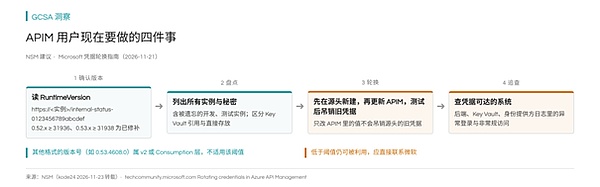
Figure 1: Risk transmission after APIM management surface is exploited (based on Microsoft announcements, NSM, and media reports)
III. What are the possible consequences?
What has already happened: The attack on Equinor lasted approximately four days, from November 17th to 20th, affecting some internal services; Skagerak Energi reported the attack attempt, stating that operations were unaffected and no information breaches were found. The NSM stated that there is currently no indication that the attack has had any consequences for Norway's energy supply, but the scale of its exploitation remains unclear.
Possible scenarios include: attackers using subscription keys to impersonate legitimate users and access your published APIs; using backend keys in Named Values to bypass APIM and directly connect to backend services or databases; using IdP/OIDC client keys to request tokens from identity providers and access other resources as an application; and using management API tokens to further modify APIM configurations and implant policies. Security researcher Anders Kristiansen points out that where credentials end up depends on their permissions and whether they are still valid. Forgotten development and test instances may also contain production credentials.
IV. What you should do now
1.Verify if the instance has been patched.Following the NSM method, access https://<your instance>/internal-status-0123456789abcdef and read the RuntimeVersion: For 0.52.x series, the last digit must be at least 31936; for 0.53.x series, the last digit must be at least 31938. If the value is below this threshold, the vulnerability still exists, and you should contact Microsoft directly. Other formats (such as 0.53.4608.0, 0.52.4150.0) belong to the v2 or Consumption layer and are not subject to this threshold.
2.Take stock of all instances and secrets.Search for API Management services in the Azure portal to list all instances, including development and testing instances; in APIs → Subscriptions and APIs → Named values, distinguish which values are Key Vault references and which are plaintext secrets stored directly, and review the hard-coded credentials, backend client certificates, OAuth/OIDC client keys, and Logger connection strings in the policy.
3.Rotate all credentials in the following order:"Create new at source→UpdateAPIM →Test→Revoke old credentials". NSM recommends assuming all secrets and named values have been leaked. Regenerate primary and secondary keys for subscription keys; refresh Key Vault after adding the new version of the named value referenced in Key Vault; create and delete the old Secret ID in Entra ID application registration → Certificates & secrets for IdP client keys; switch to secondary connection strings for Event Hubs, etc., before rotating the primary key.
4.Trace the systems reachable by credentials.Focus on the period prior to the Microsoft patch on November 19th, examining backend services, Key Vault, Entra ID logins, and audit logs for unusual access using these credentials, such as unusual IPs, unusual times, and atypical actions with administrator tokens. If signs of intrusion are found, assess the scope of data and systems reachable behind APIM.
Figure 2: Four-step process for APIM users (NSM recommendations and Microsoft rotation guidelines)
V. Supplementary Explanation
Neither Microsoft's announcement nor its rotation guidelines disclosed technical details; the rotation guidelines released on November 21 also did not directly mention the vulnerability or the Norway incident. Microsoft stated that the mitigation on November 19 required no customer action, while the NSM still requires verification of the RuntimeVersion. It is unclear whether the two are the same update, so the version actually read on the instance should be considered the definitive version. The NSM also warned that once the vulnerability becomes known, more attackers will attempt to exploit it, and the rapid proliferation of AI is exacerbating this risk.
VI. Recommendations for Subsequent Use
Treat APIM as a "credential vault": store all secrets in the Key Vault and reference them with an identifier without a version number for easy automatic refresh; tighten the accessibility of the management plane according to Microsoft network security guidelines; grant each backend credential only the permissions that APIM actually needs and rotate them regularly; take unused Classic instances offline or migrate them to v2 as soon as possible.
VII. References
• BleepingComputer: Microsoft Azure flaw exploited to steal customers' API credentials (2026-11-23):
https://www.bleepingcomputer.com/news/security/microsoft-azure-flaw-exploited-to-steal-customers-api-credentials/
• The Register: Norway links energy firm cyberattacks to critical Azure API Management flaw (2026-11-23):
https://www.theregister.com/security/2026/11/23/norway-links-energy-firm-cyberattacks-to-critical-azure-api-management-flaw/5311598
• NSM: NSM deler tiltak mot sårbarhet i Azure API Management:
https://nsm.no/aktuelt/nsm-deler-tiltak-mot-sarbarhet-i-azure-api-management
• kode24: NSM advarer: Secrets og named values er trolig på avveie (2026-11-23, including NSM version verification method):
https://www.kode24.no/artikkel/nsm-advarer-secrets-og-named-values-er-trolig-pa-avveie/279238
• Microsoft Tech Community: Rotating credentials in Azure API Management (2026-11-21):
https://techcommunity.microsoft.com/blog/integrationsonazureblog/rotating-credentials-in-azure-api-management/4575478
• Recorded Future News: Norway says hackers exploited Microsoft security flaw (2026-11-23):
https://therecord.media/norway-microsoft-cyberattack-equinor
• Equinor: Equinor detected cyber attack:
https://www.equinor.com/news/20261711-equinor-detected-cyber-attack
Conclusion
The Azure APIM Classic layer vulnerability highlights that once a cloud-based API management platform becomes an entry point for attacks, its impact can extend far beyond the service itself. APIM is designed for centralized management of API calls, authentication, and backend connections; however, Named Values, subscription keys, identity provider client keys, and other credentials can also be stored centrally on the same instance. When attackers gain management plane access, these secrets can become springboards for further access to internal enterprise systems and cloud resources. Even more alarming is that even if Microsoft closes the access path affected by the vulnerability, credentials obtained by attackers before the patch remains valid, extending the risk to other services and infrastructure that rely on these credentials.
This incident demonstrates that patching vulnerabilities is only the first step in a security response. Enterprises must also identify the scope of affected instances and assess whether all potentially exposed credentials have been read or misused. Organizations using the APIM Classic tier should follow the recommendations of Microsoft and the Norwegian National Security Agency to verify instance versions, inventory all directly stored secrets, and rotate keys, tokens, and subscription keys according to their credential issuance sources. They should also examine login and audit logs for backend systems, Azure Key Vault, and Microsoft Entra ID to investigate any unusual access activity.
From a long-term protection perspective, enterprises should avoid storing sensitive credentials directly in API management platforms. They should prioritize dedicated security management services such as Azure Key Vault and strictly limit the network reachability and credential permissions of management interfaces. Furthermore, development, testing, and decommissioned but still online legacy instances should not be overlooked, as these environments may also retain valid credentials that can be used to access production systems. As enterprises increasingly rely on cloud APIs to connect internal applications and third-party services, credential management should no longer be viewed as a simple configuration task but should become a core component of cloud security governance. Only by combining vulnerability patching, credential rotation, access control, and continuous monitoring can the risk of a single management platform breach escalating into a cross-system security incident be reduced.
Copyright and Disclaimer
This article was published by the GCSA Global Cyber Security Alliance. Copyright of original content belongs to GCSA; copyright of third-party content cited or reproduced belongs to the original rights holder. Please indicate the source and retain the original link when reprinting.
This article is for cybersecurity research and informational purposes only and does not constitute investment, legal, or financial advice. The related technical analysis, risk assessments, and attack attributions are based on existing evidence. The scope of GCSA's independent verification is as disclosed in this article, and the conclusions may be updated as new evidence emerges.
Please follow GCSA on social media for the latest updates.
GCSA X (Twitter):
https://x.com/gcsa_com
GCSA Telegram:
https://t.me/GCSAofficial
GCSA WeChat Official Account:
https://mp.weixin.qq.com/s/ouyL9NwrDDjhMumvehdOmw
Source:Global Cybersecurity Alliance (GCSA)
Website:www.gcsa.org
Get updates in your inbox
We respect your privacy. See our Privacy Policy