
Introduction
On November 17, 2026, Rakuten Securities, a Japanese online brokerage firm, disclosed an unauthorized access incident involving its test environment, potentially resulting in the leakage of some customer information. According to the company's announcement, the affected information falls into two categories: up to approximately 11.25 million accounts are affected, involving branch locations, customer codes, and login IDs; another up to approximately 4.47 million accounts are affected, involving broader information such as identity, contact information, bank accounts for withdrawals, and financial assets. These figures reflect the potentially affected account range and do not represent the confirmed amount of data leaked.
On November 18th, ITmedia NEWS further cited Rakuten Securities' explanation: Due to the need for functional verification during a system upgrade, some un-anonymized production customer data was copied to a test server, which was subsequently subjected to unauthorized access exploiting a vulnerability. Therefore, the focus of this incident is not only on the potential scale of the data breach, but also on access control, exception approval, and risk management when sensitive production data enters a non-production environment.
The following is a complete reprint of the original incident analysis report, with only the Japanese terms such as "口座" and "本番" being standardized into standard Chinese. All chapters, data, charts, judgments, and references from the report are retained. Analytical inferences in the original report should not be considered as evidence that GCSA has completed independent technical forensics.
Rakuten Securities may have had up to 11.25 million account information leaked: Unidentified production customer data was copied into a test server and then compromised.
Daily Security Insights (Event Analysis) | November 19, 2026 | All times in this article are Tokyo time (UTC+9)
On November 17, 2026, Rakuten Securities, a Japanese online brokerage firm, announced that a third party had made unauthorized access to its system, potentially resulting in the leakage of some of the company's customer information. The impact was twofold: up to approximately 11.25 million accounts had their branch locations, customer codes, and login IDs exposed; and up to approximately 4.47 million of these accounts had their names, dates of birth, addresses, phone numbers, email addresses, employers, bank accounts for withdrawals, self-reported annual income and financial assets, information on various financial products, and last login dates exposed. On November 18, Rakuten Securities explained to ITmedia NEWS why this data appeared in the test environment: for functional verification during a system upgrade, the company copied some production customer data to the test server without masking it.
The lesson from this incident is not complicated: test environments are usually less secure than production environments. Once real customer data is put in, attackers don't need to compromise the production system. Although the leaked fields did not include passwords and transaction passwords, the login ID, contact information, withdrawal account, and asset size were enough for attackers to write a phishing email or phone call that "looked like Rakuten Securities."
I. Event Timeline
Table 1: Timeline of Unauthorized Access to Rakuten Securities Events
Time (Tokyo time UTC+9) | event | Source/Evidence |
|---|---|---|
The time has not been announced. | For functional verification during system upgrades, some production customer data was copied to a test server for a "certain period," and the data was not masked; the company claims this was done through formal internal procedures. | ITmedia NEWS Interview, November 18, 2026 |
11-11 (Wednesday) | Some information managed within the test environment system may be taken out to the outside. | Rakuten Securities Announcement 11-17 |
11-16 (Monday) | Unauthorized access to some systems was detected; the access was blocked and corrected. | Rakuten Securities Announcement 11-17 |
11-17 | The announcement indicated the potential scope of the leak (approximately 4.47 million / approximately 11.25 million accounts), stating that the identification of affected customers had been completed and individual notifications would be provided. | Rakuten Securities Announcement (press2026111702) |
11-18 17:40 | ITmedia reported that the company stated: Upgrade verification required production data; the data on the test server was not masked; the vulnerability was exploited, leading to the intrusion; they declined to comment on the timing of the production data copying and the specific period of the upgrade. | ITmedia NEWS |
II. Why is the data in the test environment?
Rakuten Securities told ITmedia that: normally, only fake data is stored in the test environment and test servers, not production information; this time, due to an internal system upgrade, "some functions required confirmation using data from the production environment," so some customer information from the production environment was copied to the test server for a period of time for verification, without any masking. The company emphasized that this was not the arbitrary decision of any single employee, but followed formal internal procedures; the test server also had security measures, but "a vulnerability was exploited," resulting in unauthorized access. The company did not answer when the production data was copied in, how long the upgrade lasted, or explain the exploited vulnerability.
There are three overlapping issues here. First, the test environment contained real data, not anonymized data, so the security level of the test environment effectively determined the security level of the customer data. Second, the scope of the copying was extensive: it included not only identity and contact information, but also high-value fields such as withdrawal accounts and asset sizes, as well as information on closed accounts. Third, there was a five-day gap between the potential leak on November 11th and its discovery on November 16th.
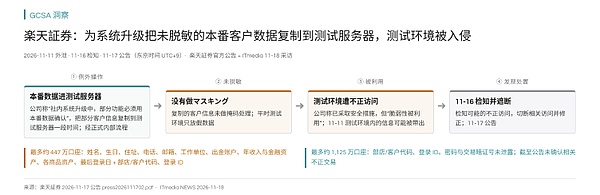
Figure 1: From "Exceptionally putting production data into the test server" to leakage: a path formed by the superposition of process approval, lack of data anonymization, and vulnerability exploitation.
III. What was leaked, and what wasn't?
The official breakdown of potentially leaked information is divided into two layers. The first layer, potentially involving approximately 4.47 million accounts, includes: branch office and customer codes, login IDs, names, pseudonyms, dates of birth, addresses, phone numbers, email addresses, employers, withdrawal accounts (financial institutions, account numbers, nominal holders), annual income and financial assets (customer-reported information), asset information for various financial products, and last login date. The second layer, potentially involving approximately 11.25 million accounts, includes: branch office and customer codes and login IDs. ITmedia estimates the total to be approximately 15.72 million accounts. Note that the login IDs mentioned here refer to Rakuten Securities' login IDs, which are different from Rakuten IDs.
Rakuten Securities stated that there is no confirmed leakage of essential trading information such as login passwords and trading passwords, and as of the announcement, there has been no confirmation of unauthorized access or unauthorized transactions resulting from this incident. In other words, the attackers already possess "account names" and substantial credible personal background information, but lack the credentials to directly log in and place orders. The most likely next step is to impersonate Rakuten Securities to steal these credentials.
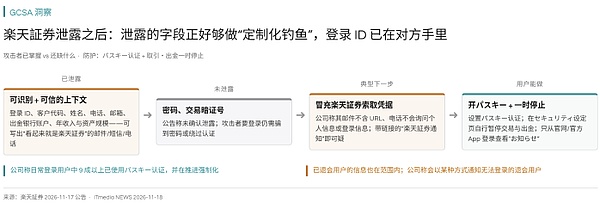
Figure 2: Information that attackers have and lack, and the protective measures users can take immediately.
IV. Impact and Company's Handling
Rakuten Securities has blocked access to the affected customers and completed the necessary corrections. The company stated that it has identified the affected customers and notified them of the potential leak through a notification page after login. For customers who have closed their accounts and are unable to log in, the company stated that it will notify them through other means. The company reminds customers that its emails do not contain URLs, and its phone calls will not ask for personal information or login details. Customers should be extremely wary of emails, text messages, phone calls, and mail impersonating Rakuten Securities or its affiliates.
Rakuten Securities is implementing a mandatory passkey authentication login system, with the company stating that over 90% of its daily logins are already using it. Customers can also configure temporary suspensions for various transactions and withdrawals on the security settings page after logging in. According to The Japan Times, Rakuten Group's stock price fell by more than 7% in early trading on the 18th after the announcement. This is not Rakuten Group's first data-related incident this year: Rakuten Drive and Rakuten Travel both issued announcements in October regarding unauthorized access.
V. Recommendations
Rakuten Securities customers: 1. If you haven't set up a passkey yet, do so immediately; 2. If you are not trading in the near future, temporarily suspend trading and withdrawals in the security settings; 3. Log in only through the official app or manually entered website address, and check the "Notifications" to confirm if your information is within the scope; 4. Any "Rakuten Securities Notifications" with links, phone calls inquiring about login information, or requests to "confirm withdrawal accounts" should be treated as fraud; 5. The bank where your withdrawal account is located may also be a target of impersonation, so be wary of "account abnormality" notifications sent in the name of your bank.
Enterprise security and development teams: Use synthetic data or irreversibly anonymized data for testing and verification whenever possible; when production data is absolutely necessary, minimize the scope of copying by field, limit the time window, and destroy the data after completion. Simultaneously, equip the test environment with the same level of access control, vulnerability management, and anomaly monitoring as the production environment. Moving production data into the test environment should be considered a high-risk change, not just a matter of approval.
Reference source
• Rakuten Securities: Rakuten Securities has the possibility of information leakage and the possibility of information leakage (2026-11-17):https://www.rakuten-sec.co.jp/web/company/newsrelease/pdf/press2026111702.pdf
• ITmedia NEWS: Is Rakuten Securities leaking large-scale customer intelligence and environmental information? (2026-11-18):https://www.itmedia.co.jp/news/article/2611/18/2000003302/
• ITmedia ビジネスオンライン: Rakuten Securities, information leakage of the largest 11.25 million people:https://www.itmedia.co.jp/business/articles/2611/17/news072.html
• ZDNET Japan: Rakuten Securities, possibility of leakage of customer information of up to 11.25 million customers:https://japan.zdnet.com/article/35255025/
• The Japan Times: Rakuten Securities account information compromised in major data breach:https://www.japantimes.co.jp/business/2026/11/18/companies/rakuten-securities-unauthorized-access/
• Rakuten Securities: パスキーAuthentication setting ガイド:https://www.rakuten-sec.co.jp/web/security/passkey/guide/
• Rakuten Securities: Temporary suspension of use of quotation・サービスの:https://www.rakuten-sec.co.jp/web/security/account_lock/
Conclusion
The Rakuten Securities incident highlights a significant risk in data governance for financial institutions: when real customer data is copied to a test environment for business verification purposes, even with internal approval, the data exposure can still expand. Based on currently available information, the specific details of the test environment vulnerability, the scope of data actually obtained by the attackers, and the subsequent impact have not been fully disclosed.
For financial institutions, minimizing production data, isolating testing environments, reviewing exception authorizations, and monitoring abnormal data transmission should be considered part of a unified security control system. For users, the focus should be on being wary of targeted phishing and identity theft using real accounts and personal information. These assessments are based on publicly disclosed information and are subject to further official investigations and additional evidence.
Copyright and Disclaimer
This report and related technical analysis are exclusively published by the GCSA Global Cybersecurity Alliance. For reprint permission, please retain the official GCSA source and original link in full, and do not maliciously alter the core viewpoints of the report.
This article is for cybersecurity research, public risk awareness, and informational reference only, and does not constitute investment, legal, or financial advice. The terms "potential breaches," "potential risks," and attack scenarios mentioned herein should be distinguished from verified facts. Unless otherwise expressly stated, the GCSA has not conducted independent forensic investigations or attributed the attack to this incident.
Please follow GCSA on the following social media platforms; we will update you with the latest news as soon as possible.
GCSA X (Twitter):
https://x.com/gcsa_com
GCSA Telegram:
https://t.me/GCSAofficial
GCSA WeChat Official Account:
https://mp.weixin.qq.com/s/BFNL5mXY7TCtOJ76QVUDWQ
Source:Global Cybersecurity Alliance (GCSA)
Website:www.gcsa.org
Get updates in your inbox
We respect your privacy. See our Privacy Policy